Toronto entered moderate bubble-risk territory in the 2026 global index after sustained home-price declines and elevated financing costs cooled demand in the city's market.
Real house prices in Toronto fell ~10% over the past year, while higher-for-longer financing costs are likely to cap near-term house-price gains.
Policy moves such as new taxes, purchase bans, and rent controls helped dim Toronto's appeal, showing how regulation and macro conditions reshaped demand.
Affordability remained a serious constraint in Toronto, with entry costs still prohibitive for many first-time buyers, keeping rental demand elevated and supporting existing landlords.
Toronto's investment case persisted through rental strength and supply constraints, but the era of near-automatic appreciation has passed for now until sustained rate relief arrives.
-
Toronto Bubble Risk Eases
-
In 10 Toronto Resales Fell Below Purchase Price
Toronto agents say many owners who bought during the market peak are discovering current comparable sales may not support the prices they originally paid.
For owners considering a move, one practical starting point is simple: decide whether selling is truly necessary before setting expectations in today’s market.
Selling below the purchase price does not always mean mortgage trouble; owners with enough equity may still repay the loan and complete a sale.
Some Toronto freehold owners are choosing renovations and a longer hold instead, especially after weighing a potential sale loss and another land transfer tax.
Toronto professionals say buyers focus on current value, not an owner’s past purchase price, so realistic pricing and empathy matter most today. -
Toronto Buyers Are Combining Condo Units
In Toronto's tough presale market, two condo projects have still attracted buyers by focusing on end users, not the fast-moving investors who once dominated.
A boutique project near Yorkville and the Annex is ~40% sold, with many buyers combining smaller suites into homes averaging ~$3M before customization.
A north Toronto project is ~35% sold after cutting planned units to ~500, creating more spacious layouts, including many two-bedroom and some three-bedroom homes.
Both projects have leaned into downsizer demand, with buyers seeking luxury or better livability, while accepting a slower sales cycle than Toronto's past boom.
One Toronto project is building with its own capital despite modest presales, while the other targets construction in 2027 after reaching financing thresholds. -
GTA Homebuyer Competition Weakens Further
In Mid-Q3, just 2% of qualifying GTA neighbourhoods landed in overbidding territory, versus 3% in Early-Q3, signaling softer buyer competition across the market.
Among 267 qualifying GTA neighbourhoods, 97% were underbid and 1% sold at asking in Mid-Q3, showing bidding wars were rare across GTA.
The condo and single-family gap kept narrowing: 95% of neighbourhoods with enough single-family sales were underbid, versus 98% of qualifying condo neighbourhoods.
An economist said Mid-Q3 had been one of GTA Real Estate’s quietest periods, and recently that pattern meant less competition for buyers.
Across 4.2K GTA homes sold in Mid-Q3, 79% changed hands below asking, versus 78% in Early-Q3, as single-family homes stopped bucking softer demand. -
Toronto Buyers Need Fewer Letters
In a recent Toronto deal, buyers wrote a personal note, yet sellers still chose them mainly because they submitted the highest bid.
That shift reflects Toronto’s weaker market: fewer bids on homes, almost no multiple offers on condos, and less need for emotional tie-breakers.
In Toronto’s past hotter market, a letter could help when offers matched, especially after heavy showings and crowded offer nights created intense competition.
Now, a Toronto listing agent’s priority is straightforward: choose the strongest price, because most sellers won’t trade money for a heartfelt buyer story.
For Toronto buyers today, solid offers matter more than love letters, with stronger deposits, fewer conditions, or flexible timing helping show real commitment. -
Toronto Home Prices Dip: More Opportunity for Buyers
In August 2026, the median sale price for all residential properties in the City of Toronto dropped 4% compared to last year. This shift means buyers may find more affordable options and better value in today’s market. If you’ve been waiting for a window to enter Toronto real estate, now could be your chance.
Continue to full article -
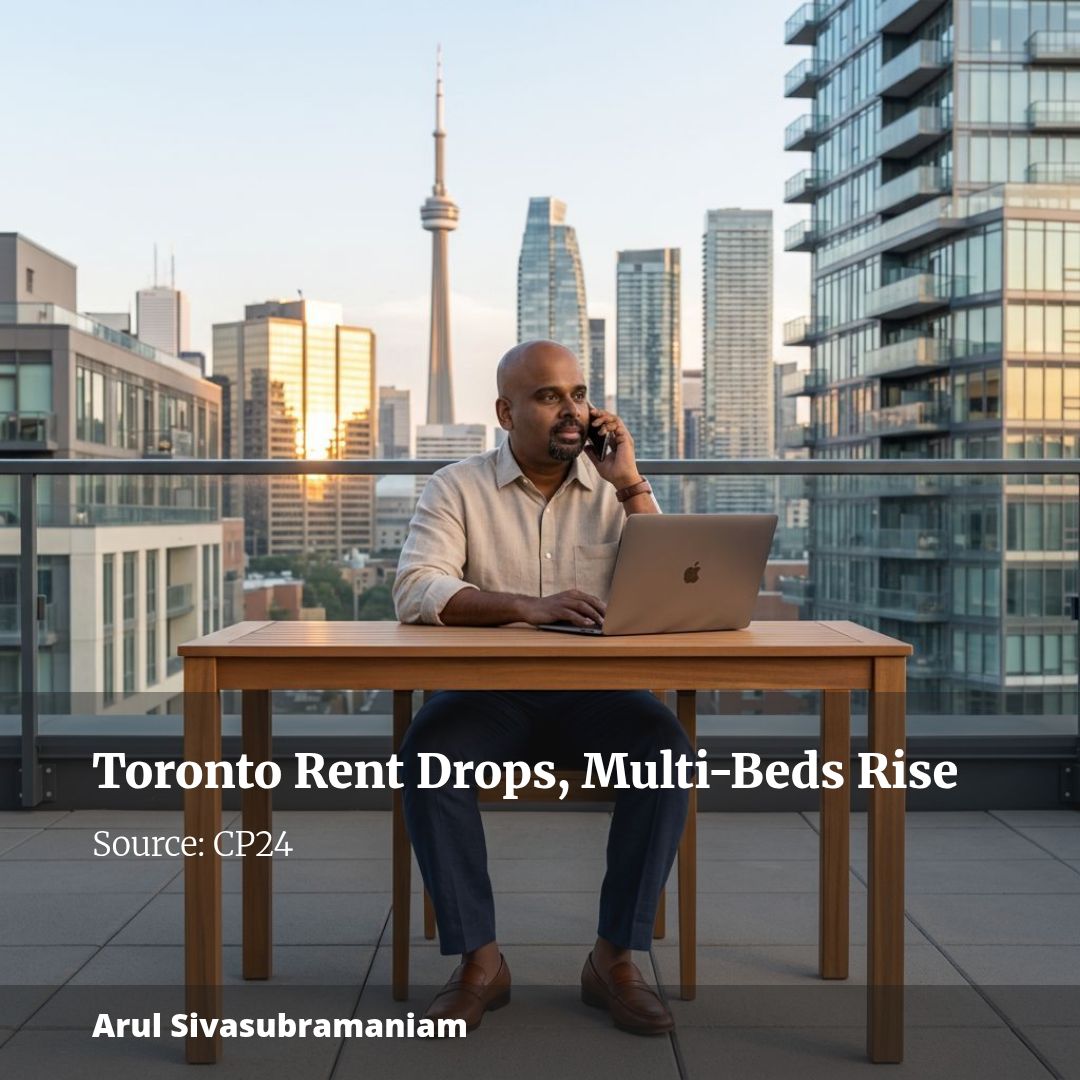
Toronto rent prices fell again last month but multi-bedroom units could be getting more expensive: report
Toronto's average rent fell 1.8% to $2,571, continuing a multi-year decline, but rents for two- and three-bedroom units rose by 0.3% and 3.5%, respectively. Nationally, average rent dropped 4.8% to $2,035, the lowest since 2022. Toronto ranked as the fourth most expensive rental market in Canada. The rental market outlook is uncertain due to potential impacts from the U.S. trade war on business and construction costs.
Continue to full article -
Toronto homeowners can claim up to $6,650 in flood protection rebates amid rising insurance claims
Homeowners in the Greater Toronto and Hamilton Area can use rebate programs to offset costs for upgrades protecting against flooding and climate damage. Toronto’s Basement Flooding Protection Subsidy offers up to $6,650 for improvements like sump pumps and backwater valves. Energy-efficiency upgrades, while not always lowering insurance premiums, reduce risks from floods and wildfires. Homeowners should check eligibility and consult insurers before upgrading.
Continue to full article -
Toronto Micro Condos Lose Value Faster
In Toronto, lower prices on some condos did not automatically mean better value; buyer interest varied by unit size, location, and intended use.
The pressure centered on smaller units, where supply and demand fell out of balance as completed homes reached market while interest in studios weakened.
Developers had expanded small-condo projects after strong post-COVID demand, but later faced more available units than interested buyers or renters for those layouts.
An economist said reduced immigration and fewer students or temporary residents likely cut demand for studios, while larger units better matched longer-term Toronto households.
For Toronto buyers, condos still could fit first-time ownership or student rental needs, with tentative improvement signs emerging even as the longer-term direction remained unclear.